




As cloud adoption continues to rise, so do the security risks that can result in significant financial losses and operational disruptions.
According to IBM’s Cost of a Data Breach Report 2024, the global average cost of a data breach has hit an all-time high at $4.88 million, increasing by 10% compared to the previous year.
For businesses, this underscores the urgent need to adopt a proactive approach to cloud security—not only to safeguard sensitive data but also to avoid the devastating impact of breaches.
| As Matthew Keeler, CEO of The KR Group, explains, “Cloud security is no longer optional—it’s a fundamental business necessity to protect sensitive data and ensure operational continuity.” |
In this article, we’ll explore nine critical cloud computing security threats and provide actionable strategies to help you mitigate them effectively.
1. Misconfigured Cloud Settings
Cloud misconfigurations remain one of the leading causes of data breaches and exposure. When storage buckets, databases, or virtual machines are not properly secured, attackers can easily exploit these gaps to gain unauthorized access to sensitive information.
How to Mitigate:
- Implement least privilege access to restrict permissions, ensuring users and systems only have access to what they absolutely need.
- Enable automated compliance monitoring to continuously scan for and correct misconfigurations in real time.
2. Inadequate Identity and Access Management (IAM)
Weak IAM policies create opportunities for cybercriminals to exploit compromised credentials, resulting in unauthorized access and potential data breaches.
How to Mitigate:
- Enforce multi-factor authentication (MFA) to add an extra layer of security and prevent unauthorized logins.
- Implement role-based access control (RBAC) to limit user permissions based on job responsibilities, reducing the risk of excessive access.
Lock Down Your Cloud with Enterprise-Grade SecurityFrom encryption to access controls, get a complete security strategy that keeps your data safe. |
3. Data Breaches in Cloud Computing
Cloud storage environments are prime targets for cybercriminals, with data breaches leading to financial losses, reputational damage, and regulatory penalties. Attackers often exploit weak encryption, poor access controls, or vulnerabilities in cloud platforms to steal sensitive information.
How to Mitigate:
- Encrypt data at rest and in transit to ensure unauthorized users cannot read or intercept sensitive information.
- Monitor access logs and user activity to detect suspicious behavior and unauthorized access attempts.
4. Insider Threats
Employees, contractors, or third-party vendors with legitimate access to cloud environments can pose a serious security risk, whether through negligence or malicious intent. Insider threats can lead to data theft, privilege abuse, or unintentional leaks.
How to Mitigate:
- Conduct regular security awareness training to educate employees on security best practices and potential risks.
- Implement user behavior analytics (UBA) to detect unusual activities, such as unauthorized data access or large file transfers.
5. Distributed Denial-of-Service (DDoS) Attacks
DDoS attacks flood cloud servers with excessive traffic, causing downtime, slow performance, and service disruptions. Attackers leverage botnets to overwhelm networks, making cloud applications inaccessible without robust network support.
How to Mitigate:
- Deploy cloud-based DDoS protection to detect and filter malicious traffic before it reaches your infrastructure.
- Utilize load balancing and redundancy to distribute traffic across multiple servers, reducing the impact of an attack.
6. Insecure APIs and Third-Party Integrations
Application programming interfaces (APIs) facilitate cloud communication, but poorly secured APIs can expose critical data and infrastructure to attackers. Threat actors often exploit weak authentication, improper data validation, or outdated integrations to gain unauthorized access.
How to Mitigate:
- Enforce API authentication and encryption to ensure secure data transmission between systems.
- Perform regular API security testing to identify vulnerabilities and apply necessary patches or updates.
7. Malware and Ransomware Attacks
Cloud environments are increasingly targeted by malware and ransomware attacks, where cybercriminals encrypt or exfiltrate data to demand a ransom. These attacks can cripple business operations and result in permanent data loss.
How to Mitigate:
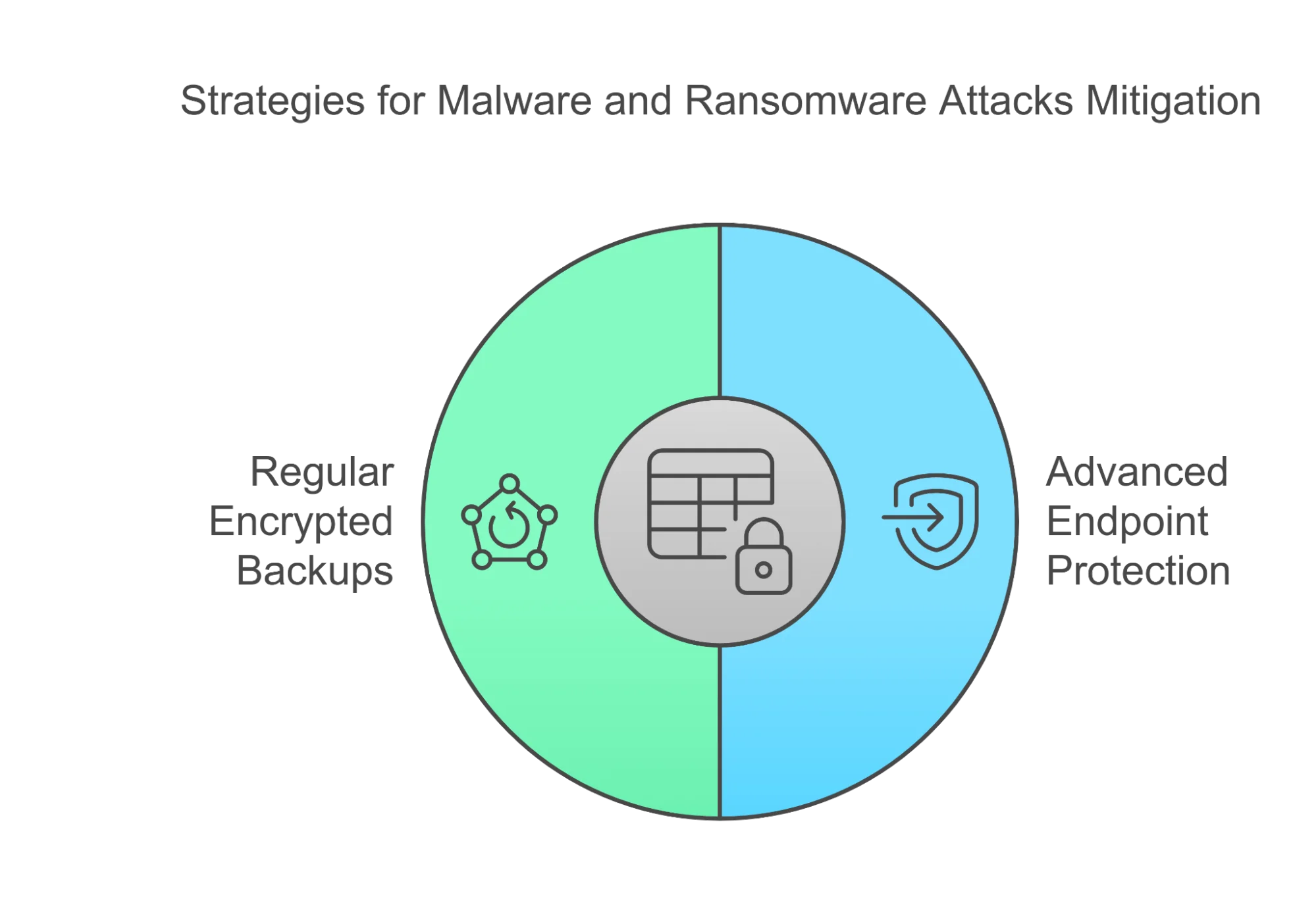
- Deploy advanced endpoint protection with threat detection to identify and block malware before it spreads.
- Maintain regular, encrypted backups stored in isolated locations to ensure rapid recovery in case of an attack.
8. Compliance and Regulatory Risks
Organizations operating in regulated industries must adhere to strict compliance requirements. Failure to meet data protection standards can result in hefty fines and legal consequences. Cloud misconfigurations, poor security controls, or lack of proper auditing can lead to non-compliance.
How to Mitigate:
- Conduct regular security audits and compliance assessments to ensure adherence to industry regulations such as GDPR, HIPAA, and CMMC.
- Leverage cloud-native security tools to automate compliance monitoring and enforce security policies across cloud environments.
9. Lack of Visibility and Monitoring
Without proper visibility into cloud environments, security teams struggle to detect and respond to threats in real time. Limited monitoring increases the likelihood of undetected breaches, data leaks, or unauthorized access.
How to Mitigate:
- Implement continuous security monitoring to track cloud activities, detect anomalies, and respond to potential threats proactively.
- Integrate a Security Information and Event Management (SIEM) system to centralize security alerts and provide real-time threat intelligence.
| Stay ahead of security risks—explore expert strategies to safeguard your business at CloudSecureTech. |
Cloud Security Best Practices
| Best Practice | Benefit |
| Enable Multi-Factor Authentication (MFA) | Prevents unauthorized access by adding an extra security layer. |
| Use Strong Encryption | Protects data from interception and unauthorized modifications. |
| Apply Least Privilege Access | Reduces attack surface by limiting access to only necessary users. |
| Implement Continuous Monitoring | Detects threats in real time and enables quick response. |
| Secure APIs and Integrations | Prevents unauthorized access and data leaks. |
| Conduct Regular Security Audits | Ensures compliance and identifies vulnerabilities. |
| Deploy Advanced Threat Detection | Identifies and blocks threats before they cause damage. |
| Backup Critical Data | Ensures data recovery in case of cyberattacks. |
| Train Employees on Cybersecurity | Reduces human errors and increases security awareness. |
| More articles you might like: |

Strengthen Your Cloud Security Defenses Today
Addressing cloud security threats head-on is crucial to protecting your data, ensuring compliance, and maintaining business continuity. By implementing robust identity controls, enabling continuous monitoring, and adopting proactive threat management practices, you can secure your cloud environment against evolving attacks.
At The KR Group, we specialize in securing cloud infrastructures with cutting-edge solutions tailored to your needs. Don’t wait for a breach to take action—contact us today to assess your cloud security posture and implement defenses that keep your data safe.
|
Discover Trusted Managed IT Services Near You |