


Migrating to the cloud offers scalability and cost savings, but poor planning can lead to unexpected expenses. In fact, 75% of cloud migration projects run over budget, often due to rushed execution, security gaps, or a lack of alignment with business goals.
| As Matthew Keeler, CEO of The KR Group, says, “A successful cloud migration process isn’t just about moving data—it’s about strategic planning, risk management, and long-term optimization.” |
By following structured steps in cloud migration, you can prevent unnecessary costs, minimize disruptions, and ensure a seamless transition to the cloud.
Let’s break down the process into simple, actionable steps to help you migrate efficiently and cost-effectively.
Cloud Migration Steps: A Structured Approach for Success
1. Define Your Cloud Migration Goals
Before diving into technical execution, clarify why you’re migrating to the cloud. Without clear objectives, businesses often struggle with inefficient resource allocation and unexpected costs.
Are you looking to:
- Reduce infrastructure costs by eliminating expensive on-premise hardware?
- Enhance scalability and performance to support business growth?
- Improve security and compliance with robust cloud-native security controls?
Start by evaluating your IT environment and establishing measurable success criteria. Clearly defined goals will help you choose the best cloud migration process and avoid unnecessary delays or expenses.
Migrate to the Cloud Without the HeadachesAvoid costly delays and disruptions—let The KR Group streamline your cloud migration process. |
2. Assess Your Current IT Environment
Only about 44% of small businesses utilize cloud systems, which is why a detailed assessment of current infrastructure is critical for a smooth transition. Without a comprehensive understanding of existing systems, migrations can lead to compatibility issues, downtime, or security vulnerabilities. Key steps include:
- Inventorying all applications, workloads, and dependencies to identify critical components.
- Identifying outdated or redundant systems that may need upgrading or replacing.
- Analyzing security risks and compliance requirements to ensure regulatory adherence.
Many companies overlook application dependencies, leading to performance issues post-migration. A thorough audit helps you determine which workloads need optimization before moving to the cloud. Additionally, consider application connections to prevent slowdowns when migrating in phases.
3. Choose the Right Cloud Model
Selecting the right cloud model is essential for long-term success. The wrong choice can lead to excessive costs, security risks, or operational inefficiencies. Consider:
- Public Cloud – Cost-effective and highly scalable (AWS, Azure, Google Cloud), ideal for startups and businesses needing flexible resources.
- Private Cloud – Increased security and control, making it suitable for regulated industries handling sensitive data.
- Hybrid Cloud – A combination of both, balancing scalability with on-premises security and control.
Compare costs, security, and performance before finalizing your cloud provider. Factor in long-term expenses, such as data transfer fees and compliance costs, to avoid budget overruns.
4. Develop a Cloud Migration Strategy
Different applications require different migration approaches. A one-size-fits-all strategy rarely works, and choosing the wrong approach can lead to inefficiencies. Your strategy should align with your business needs:
- Lift-and-Shift – Moves workloads as-is, offering the fastest transition but minimal optimization.
- Replatforming – Adjusts applications for better cloud efficiency, improving performance without extensive redesign.
- Refactoring – Completely redesigns applications to take full advantage of cloud-native features, maximizing efficiency but requiring more development effort.
Prioritize which applications to migrate first, ensuring minimal disruption to business operations. Consider starting with non-critical applications to test performance before moving mission-critical workloads.
5. Execute the Migration Process Step by Step
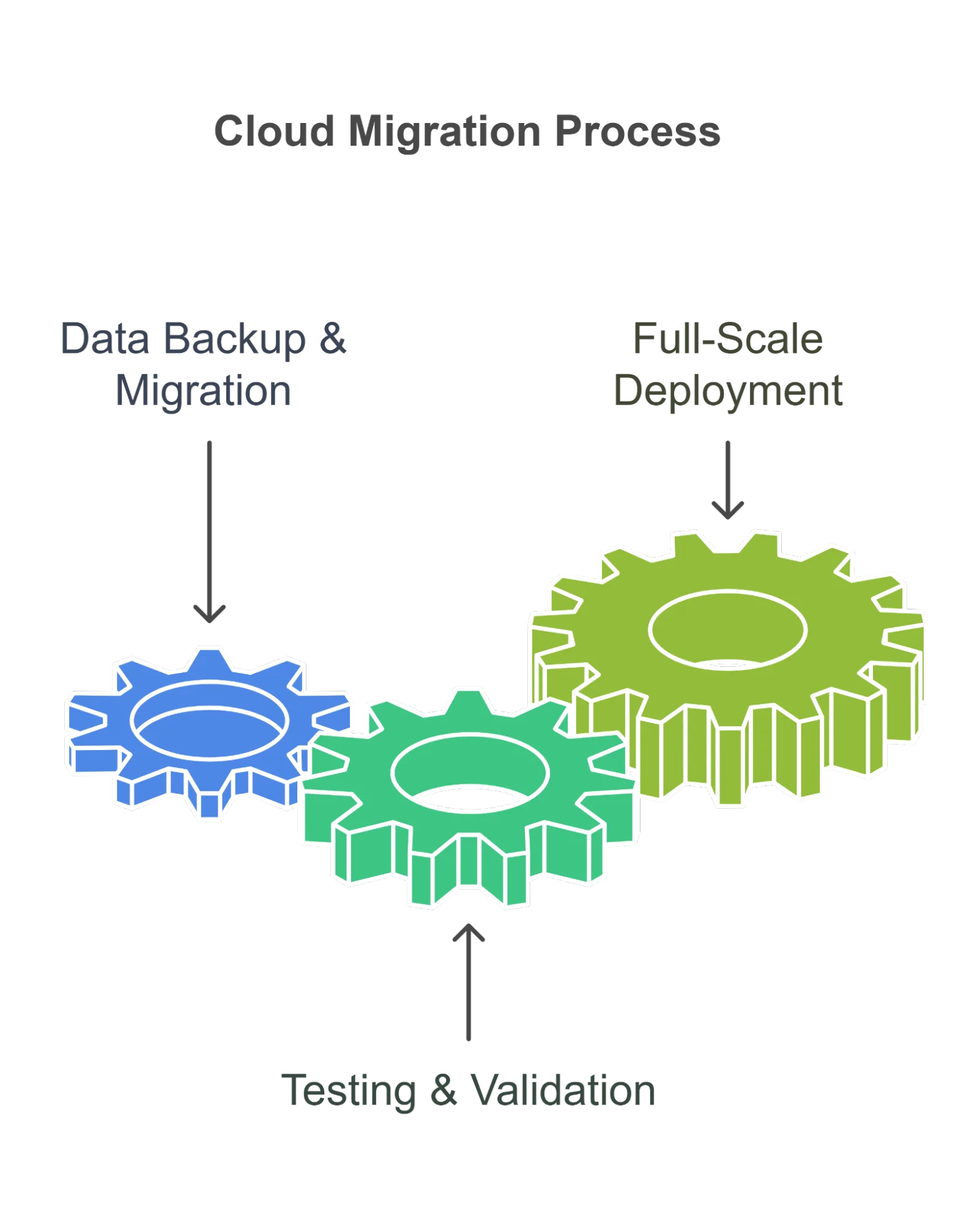
Breaking the migration into steps for cloud migration ensures a seamless transition. A phased approach prevents downtime and reduces risk. Key steps include:
- Data Backup & Migration – Secure all data before transferring to the cloud to avoid loss or corruption. Use encryption to protect sensitive information during transit.
- Testing & Validation – Conduct rigorous performance tests before full deployment. Simulate real-world workloads to ensure stability and scalability.
- Full-Scale Deployment – Roll out cloud applications in phases, continuously monitoring performance and resolving issues before scaling up.
Testing is crucial—without it, you risk application failures, increased downtime, and negative impacts on end users. Establish rollback plans in case unexpected issues arise.
6. Optimize and Secure Your Cloud Environment
Once migration is complete, ongoing optimization is key to maximizing cloud benefits. Nearly 42% of business owners admit to not leveraging their technology fully, according to CloudSecureTech. Many companies stop at migration and fail to continuously refine their cloud environment, leading to inefficiencies. Focus on:
- Monitoring & Cost Optimization – Track resource usage and scale services accordingly. Use cost-management tools to avoid over-provisioning and reduce unnecessary spending.
- Security Enhancements – Implement encryption, multi-factor authentication, and compliance checks to protect data and meet regulatory requirements. Regular security audits can help identify vulnerabilities before they become threats.
- Staff Training & Cloud Governance – Ensure teams understand cloud management best practices and security protocols. Establish governance policies to control access, prevent misconfigurations, and streamline operations.
A proactive approach ensures long-term success, security, and cost-efficiency in your cloud environment. Regular performance reviews and security updates will help you maintain an optimized cloud infrastructure.Simplified Step-by-Step Cloud Migration GuideSeamless Cloud Migration with The KR Group.
Simplified Step-by-Step Cloud Migration Guide
| Step | Action | Key Considerations |
| 1 | Define Migration Goals | Align with business needs |
| 2 | Assess IT Infrastructure | Identify dependencies and risks |
| 3 | Choose Cloud Model | Public, Private, or Hybrid |
| 4 | Develop Strategy | Lift-and-shift, replatform, or refactor |
| 5 | Migrate Workloads | Backup, test, deploy in phases |
| 6 | Optimize & Secure | Monitor costs, enhance security |
| More articles you might like: |

Seamless Cloud Migration with The KR Group
A well-executed cloud migration process lowers costs, boosts efficiency, and enhances security. By following structured cloud migration steps, businesses can minimize disruptions, prevent downtime, and avoid unexpected expenses.
The KR Group provides expert guidance at every stage of migration, ensuring a smooth and secure transition to the cloud. Contact us today to schedule a consultation and take the next step in your cloud transformation journey.
| Discover Trusted Managed IT Services Near You |